Search Results for "discos de juan gabriel completos para descargar"
Showing results for discs juan gabriel completes para decca
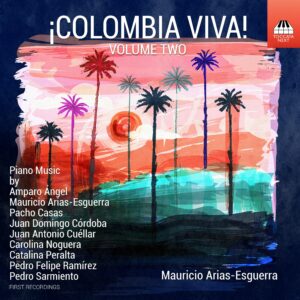
¡Colombia Viva! Volume Two
With this second volume of ¡Colombia Viva! – a series capable of infinite expansion, as is indeed intended – Mauricio Arias-Esguerra embarks on another lightning tour of the recent piano music of his native country, displaying the wide variety of styles on offer there, from atmospheric modernism to catchy folk dances, a recurrent element being striking rhythmic vivacity.
Mauricio Arias-Esguerra, piano
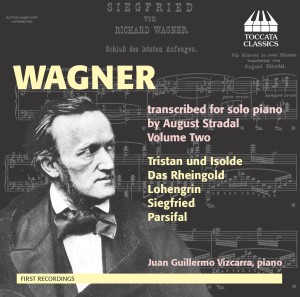
Wagner: Transcriptions for solo piano by August Stradal, Volume Two
The Czech-born pianist and writer August Stradal (1860-1930) — a student of Bruckner and disciple of Liszt — was one of the more prolific transcribers of the nineteenth and earlier twentieth centuries, producing a vast quantity of piano music, including Liszt's orchestral works, most of the Bruckner symphonies, a good deal of the Baroque (not least a huge amount of Bach) and much more, most of it phenomenally difficult to play. This series of recordings presents his Wagner transcriptions, cast in the best barnstorming virtuoso tradition.
Juan Guillermo Vizcarra, piano
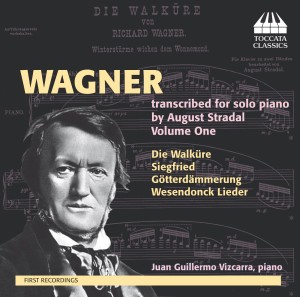
Wagner: Transcriptions for solo piano by August Stradal, Volume One
The Czech-born pianist and writer August Stradal (1860-1930) — a student of Bruckner and disciple of Liszt — was one of the more prolific transcribers of the nineteenth and earlier twentieth centuries, producing a vast quantity of piano music, including Liszt's orchestral works, most of the Bruckner symphonies, a good deal of the Baroque (not least a huge amount of Bach) and much more, most of it phenomenally difficult to play. This series of recordings presents his Wagner transcriptions, cast in the best barnstorming virtuoso tradition.
Juan Guillermo Vizcarra, piano
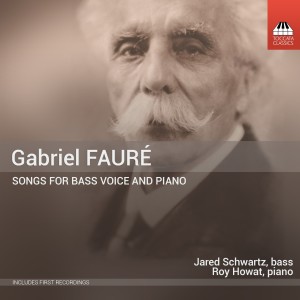
Gabriel Fauré: Songs for Bass Voice and Piano
This collection of Fauré’s mélodies – the first recording to be conceived for a bass voice – juxtaposes some of the composer’s best-loved songs with some of his lesser-known works. Going beyond the often arbitrary ordering of early editions, this programme draws out connections of poets and poetic themes, some of which restore the composer’s own original groupings. This is the first recording to be based on the new Peters Edition, which eliminates countless errors in older publications.
Jared Schwartz, bass; Roy Howat, piano;
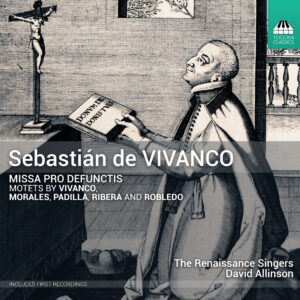
Sebastián de Vivanco: Missa Pro Defunctis; Motets
Spanish Renaissance polyphony has a reputation for florid, intricate contrapuntal textures and dark colours. Sebastián de Vivanco (c. 1551–1622), born in Ávila but active for most of his life in Salamanca, stands apart from his contemporaries: his music explores a much wider range of colours and techniques than that of, say, Victoria. In his more experimental and dramatic motets, some of which are heard here, he points the way towards the new Baroque. But in the calm sobriety of his Requiem, now reconstructed and recorded for the first time, he honours the Iberian tradition of unhurried chant-driven polyphony, all the more moving for its uncluttered clarity and exquisitely lovely chordal sequences.
The Renaissance Singers
David Allinson, director

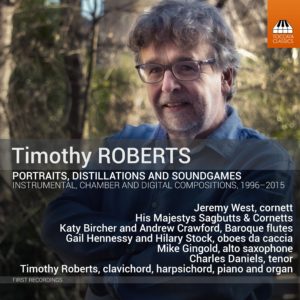
Timothy Roberts: Portraits, Distillations and Soundgames
Timothy Roberts, born in Hampstead, north London, in 1953, has been a mainstay of the early-music scene in Britain and further afield for decades. He is best known as a keyboard player, but in recent years composing has been of growing importance to him. Hardly surprisingly, his music refracts the Baroque and Classical world in which he is active, usually with a playful but respectful twist.
Jeremy West, cornett (tracks 1–13, 17–23)
Timothy Roberts, harpsichord (tracks 2–15), piano (tracks 11–16), clavichord (track 14), organ (track 22)
His Majestys Sagbutts & Cornetts (tracks 5–10)
Katy Bircher and Andrew Crawford, Baroque flutes (tracks 18–21)
Gail Hennessy and Hilary Stock, oboes da caccia (tracks 18–21)
Mike Gingold, alto saxophone (track 24)
Charles Daniels, tenor (track 27)
Digital compositions (tracks 24, 26–28)
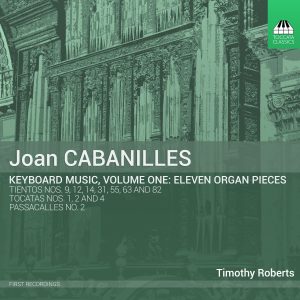
Joan Cabanilles: Keyboard Music, Volume One: Eleven Organ Pieces
Much of the music of Joan (or Juan) Cabanilles (1644–1712) is as virtuosic and colourfully Baroque as that of his northern contemporary, Dietrich Buxtehude, though it is also touched with a distinctively Spanish intensity. He is claimed as the most prolific of all composers for the organ, and publication of his works, begun in 1927, is still under way. The surviving manuscripts can be seriously corrupt, requiring extensive editing and sometimes even detailed recomposition. This is the first in an ongoing series of recordings designed to restore a great Valencian master to his unique glory.
Timothy Roberts, historic organ (1724) of the Basilica of Sant Jaume, Vila-real (Castellón/Valencia)
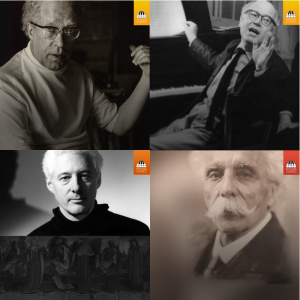
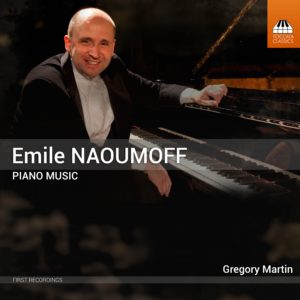
Émile Naoumoff: Complete Piano Music
Emile Naoumoff, born in Sofia in 1962, was a child prodigy as pianist and composer in his native Bulgaria but was soon taken under the wing of Nadia Boulanger in Paris – ‘the gift of my old age’, she said. Naoumoff himself has tended to record the music of other composers, and so this recital of his piano music has been recorded by Gregory Martin, who has worked with him in various capacities. It presents music from across Naoumoff’s career – from that gifted childhood to a piece inspired by the sight of Notre Dame Cathedral in flames in 2019 – absorbing influences from Slavic folk-dance to Gabriel Fauré, whose ‘grand-student’ he is.
Gregory Martin, piano
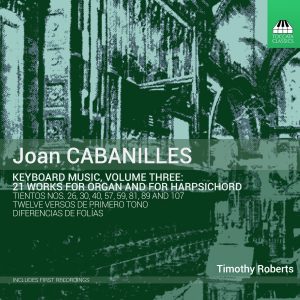
Joan CABANILLES: Keyboard Music, Volume Three
Much of the music of Joan (or Juan) Cabanilles (1644–1712) is as virtuosic and colourfully Baroque as that of his northern contemporary, Dietrich Buxtehude, though it is also touched with a distinctively Spanish intensity. He is claimed as the most prolific of all composers for the organ, and publication of his works, begun in 1927, is still under way. This is the third in an ongoing series of recordings designed to restore a great Valencian master to his unique glory.
Timothy Roberts
organ of the Church of Sant Jaume, Vila-real, Valencia (1–17)
harpsichord in seventeenth-century Flemish style by Michael Johnson (18-19)
anonymous seventeenth-century organ of the Parish Church, Banyalbufar, Mallorca (20 – 21)
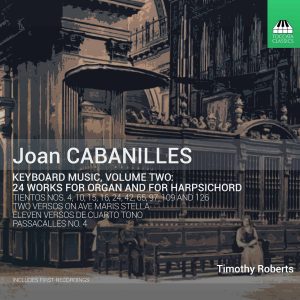
Joan Cabanilles Keyboard Music: Volume Two
Much of the music of Joan (or Juan) Cabanilles (1644–1712) is as virtuosic and colourfully Baroque as that of his northern contemporary, Dietrich Buxtehude, though it is also touched with a distinctively Spanish intensity. He is claimed as the most prolific of all composers for the organ, and publication of his works, begun in 1927, is still under way. This is the second in an ongoing series of recordings designed to restore a great Valencian master to his unique glory.
Timothy Roberts
Organ of the Church of Sant Jaume, Vila-real, Valencia (Tracks 1–20)
Organ of the Church of San José, Navalcarnero, Madrid (Tracks 21–22)
Harpsichord (Tracks 23–24)
Podcast: Gabriel Fauré: Songs for Bass Voice and Piano
Martin Anderson, Mary Dibbern, Roy Howat and Jared Schwartz discuss new Toccata release Gabriel Fauré: Songs for Bass Voice and Piano: http://feed.toccataclassics.com/media/2015-08-27_fauresongsandvoicespodcast.mp3 Click to listen…
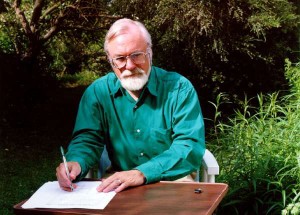
John McCabe in his Own Words
John’s death on 13 February was not unexpected – indeed, he had given his brain tumour a good fight and long outlived his doctors’ prognoses.…
Rebels without a cause?
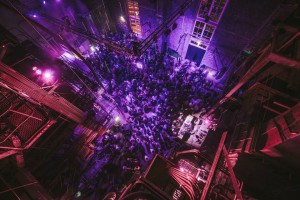
Is there really music after midnight? At Classical:NEXT in Rotterdam at the end of May I attended a panel discussion entitled ‘Music after Midnight’. I…
Gary Brain Remembered
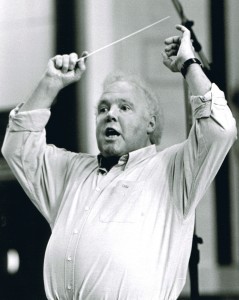
It has not been a good week. On Friday Yodit, my beloved fiancée, partner of the past seven years and mother of our five-year-old Alex,…